
How to Get Court Records
Send your request to the office serving the filing court. The County Clerk keeps the County Court's misdemeanor, county civil, probate, guardianship, and mental-health files. For District Court criminal, civil, family, and juvenile matters, go to the District Clerk. Justice and municipal clerks each hold their own lower-court papers. Ask the wrong office and you get nothing.
- Read the court name on the citation, pleading, notice, or order.
- Give the custodian a case number, date range, and named record when known.
- Ask if online, counter, mail, phone, or electronic request access is available.
- State whether inspection, a plain copy, an electronic file, or certification is needed.
- Request current fees and preserve the clerk's response.
The re:SearchTX portal offers a statewide route, though coverage, account access, documents, and prices all vary. It works alongside the local clerk, not in place of one.
Limestone County Split Custody
Custody here splits by court, and that split drives every search. Class A and B misdemeanors are filed with the County Clerk. Class C appeals from justice court go there too. The District Clerk owns criminal, civil, family, and juvenile cases in District Court. Justice clerks hold precinct claims and citations. Municipal clerks hold city cases. But a search aimed at the wrong office can come back empty even though the record exists.
| Custodian | Typical records | First route |
|---|---|---|
| County Clerk | County misdemeanor, civil, probate, guardianship | Clerk page, phone, mail, counter |
| District Clerk | District criminal, civil, family, juvenile | Clerk contact or re:SearchTX |
| Justice clerk | Precinct civil and Class C citations | Correct precinct |
| Municipal clerk | City traffic and ordinance cases | Issuing city |
The official County Clerk page identifies the county office and services.
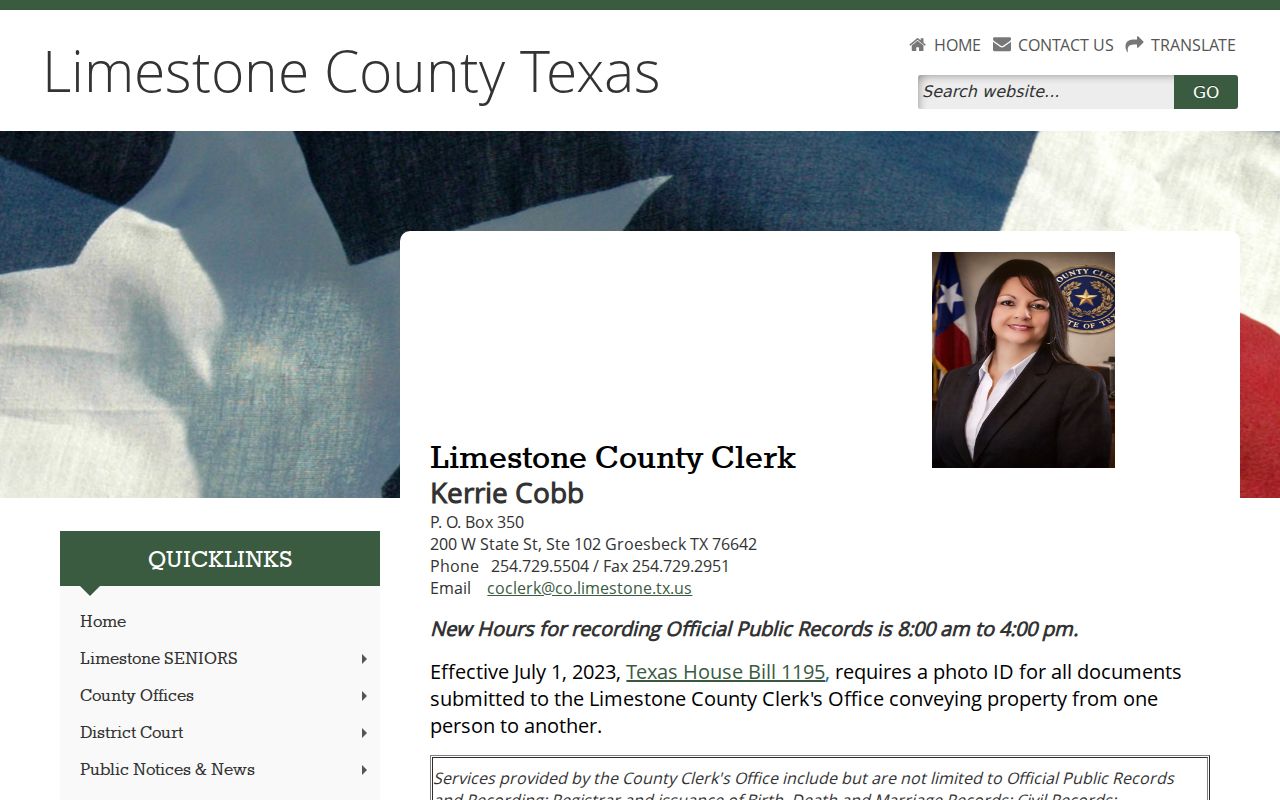
The page is the right place to verify current contact details before a request.
Limestone County Court Record Types
A docket is only one piece of a Limestone County court file. It lists settings and event headings. A register of actions, where it is exposed, gives the full chronological history. The file may also carry pleadings and motions. It can hold responses, notices, orders, judgments, citations, subpoenas, writs, summonses, and clerk processing records. Exhibits often sit apart from the public docket because they can hold sensitive facts.
- Docket sheets and court calendars
- Pleadings, motions, answers, and notices
- Signed orders and judgments
- Citations, writs, subpoenas, and summonses
- Exhibits, attachments, and filing records
Name each item in the request. An "all records" ask is hard to route and price.
CountyFusion Is Not the Docket
One online search often gets mistaken for a docket. The CountyFusion public-record search is really a deed register. It lists recorded instruments from 1861 to the present, takes a credit card, and sets its own print terms. Court records are different. They follow the court and the clerk that own each case, not this database.
For the service itself, the official CountyFusion entry shows the separate records service and its terms.
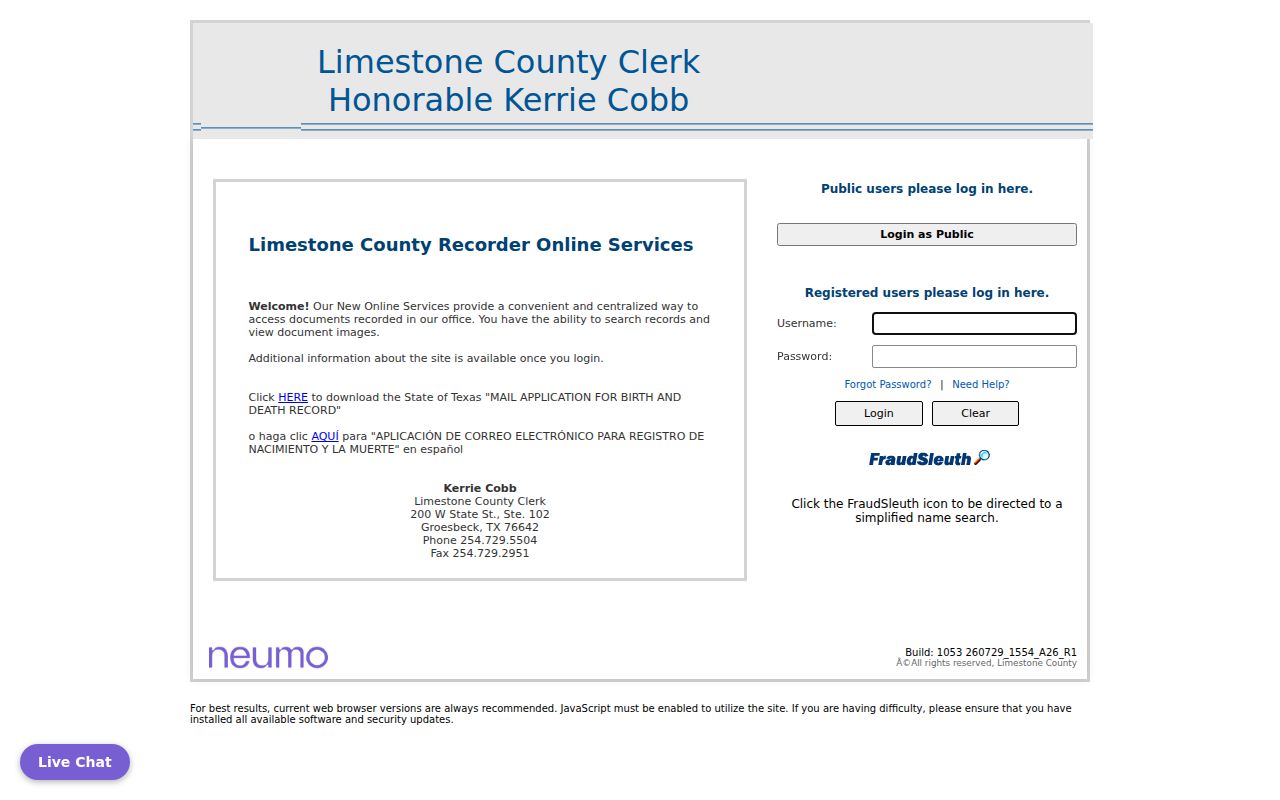
The tool is useful only when the requested item is in its recorded-instrument collection.
Two collections: CountyFusion holds official public and land records. A court clerk holds case pleadings, orders, and docket entries.
Limestone County Court Record Contents
A Limestone County court record blends identifiers, filings, and court action. A public result does not promise a download of each document. Some systems show only a case shell, and restricted papers can stay hidden even when the case number appears.
| Case number | The local identifier used to route the file |
|---|---|
| Parties | Names or roles shown when public access permits |
| Pleadings | Petitions, answers, motions, responses, and notices |
| Orders | Signed rulings and final judgments |
| Docket entries | Filing, setting, and disposition headings in date order |
| Process and exhibits | Citations, writs, attachments, or exhibits, subject to limits |
A missing result tells you little on its own. The record could be sealed, expunged, stored outside an integration, or held by another clerk.
Limestone County Written Requests
A focused request gets filled faster. Identify the court, the case number, the date range, the record type, the filing date, and whether you want certification. Add a return email or phone number. Ask if a cost estimate is required. Also ask whether redaction, postage, or a court order affects access.
Texas also splits court case records from other judicial records. The Texas Open Records Policy points to Rule 12 for judicial records beyond court case records. Trial-court case requests go straight to the local district, county, justice, or municipal clerk. If access is denied, ask which rule, law, or court order controls. Then ask what review route applies.
Certified Copies and Fees
A plain copy just reproduces the record. A certified copy carries the clerk's authentication and must be asked for by name. Limestone County posts no single court-copy fee schedule. The detailed JP2 schedule covers only that office, so ask each clerk for current copy, search, certification, postage, and payment charges.
| JP2 item | Researched amount |
|---|---|
| Certified copy | $2 first page, $0.25 each added page |
| Other copy | $1 first page, $0.25 each added page |
| Abstract of judgment | $5 |
CountyFusion's $1-per-page print statement applies to land and official public records, not to court copies across the board.
Limestone County Clerk
200 W State Street, Suite 102
Groesbeck, TX 76642
254-729-5504
Limestone County Online Limits
The legacy iDocket county index once showed last-new-case dates. Its simple search now routes to sign-in. The County Clerk says court information runs from 1985 forward. But the current screen offers no open fields without authentication. The District Clerk payment page is a payment tool, not an open docket search.
Statewide access may show parties, counsel, events, a register of actions, or documents, depending on coverage and account level. It still cannot issue a certified Limestone County copy. Use a portal to locate the file. Then ask the correct clerk what may be inspected or copied.
A empty online match proves nothing about what Limestone County holds.
Public Access and Sealed Records
Government Code Chapter 552 sets the Texas Public Information Act framework. Section 552.0035 marks the judiciary boundary. Juvenile files can be confidential under Family Code Chapter 58. Texas court rules allow civil material to be sealed. Expunction under Code of Criminal Procedure Chapter 55 is a legal process. It is never a routine clerk deletion request.
Key access rules:
Government Code Chapter 552 sets the public-information framework and judiciary boundary.
Texas court rules address sealing and redaction.
Family Code Chapter 58 governs juvenile-record access.
The official Open Records Policy explains the Rule 12 route.
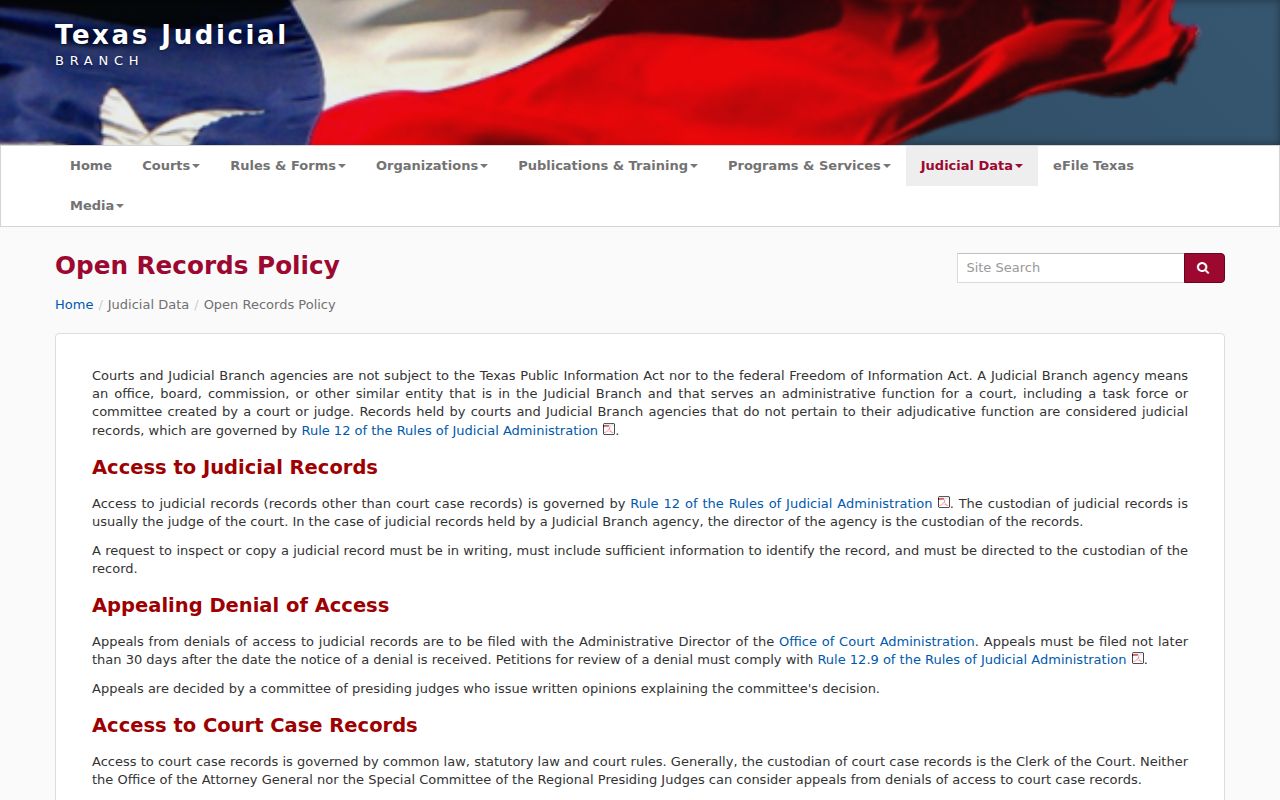
The policy shows why the record type and custodian must be identified first.
Verify Limestone County Copies
Details like hours and payment options shift. Before you visit or mail anything, confirm the office. Ask about its payment method and how copies get delivered. Ask the clerk to certify the exact filing if you need a certified copy. Then read the docket in context. A charge is not a finding of guilt. A bond is not a sentence. A Limestone County calendar can also change after it is published, so treat any listed date as a setting, not a result.
For a current file, the originating Limestone County court beats every secondhand source. A clerk there can tell you the record type. Is your item a court case record, another judicial record, or an official public record kept in a separate system? If you need several documents, list each one by title and filing date. That small step pays off. It lets the clerk tell an order apart from a notice, motion, exhibit, or judgment, and quote the right copy cost.
The County Clerk takes requests at the courthouse counter. You can also use the contact channels on its official page. The District Clerk runs its own courthouse office and phone line for district files. Any mail to either office should name the filing court, the cause number, and the document. Include the date range, your delivery choice, and a way to reach you. For a hearing you are tracking, ask the clerk to confirm the setting. Limestone County's published County Court docket states plainly that its schedule is subject to change.